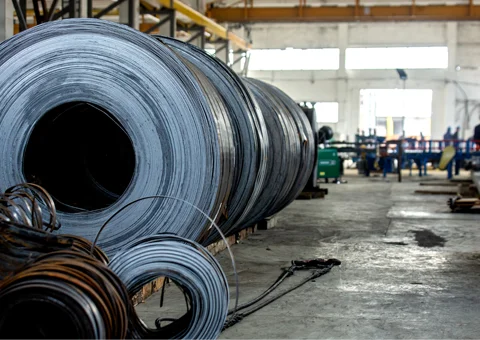
China’s hot-rolled coil (HRC) market in 2025 was characterized by a persistent supply-demand mismatch and a steady slide in prices, Mysteel’s annual report on the flat steel concluded. For the year ahead, China’s average prices for HRC are expected to strengthen slightly as a number of new downstream production facilities requiring hot coils as substrate will be commissioned, absorbing more HRC supply, according to the report.
"New production lines are expected to consume around 10 million tonnes of HRC", a Shanghai-based analyst told Mysteel Global.
The distribution of HRC capacities nationwide will likely become more balanced this year, with North China and East China maintaining their lead in the nationwide share of supply while South China and Central China will likely see some increase in their proportions, the report said.
Meanwhile, some steel enterprises are increasing the ratio of mid- to high-end products through technological upgrades and production line optimization. Most HRC producers are also likely to extend further along the value chain and absorb more hot-rolled output internally, which could ease pressure on volumes available to the spot market going forward, the report observed.
On the demand side, some clouds loom. For example, the tax levied by the central government on purchases of new motor vehicles will be reinstated this year, a change which led consumers to rush to purchase new vehicles last year, a factor that will cause growth in vehicle production and sales to slow in 2026. Auto exports, however, are expected to remain relatively resilient, with emerging markets continuing to be the main destinations, according to the report.
For home appliances, the renewal of subsidy policies by the central government is expected to underpin sales for the sector this year. However, home appliance exports may face some downward pressure as higher trade barriers including the extension of Europe's Carbon Border Adjustment Mechanism (CBAM) into white goods items like washing machines may dampen exports in the sector.
The steel structure sector fabricating products from hot coils is expected to maintain steady growth in 2026 as it shifts from Q235 toward Q355 and higher-strength grades, in line with trends toward lightweight construction, durability, and low-carbon development, the report noted.
By 2030, China's steel structure output is projected to reach about 150 million tonnes, accounting for roughly 20% of total steel consumption. Many steel structure producers are also accelerating overseas expansions, with some Chinese companies gaining recognition in some foreign markets.
As for overseas business, China's hot coil exports shrank significantly in 2025 compared with 2024, a trend which is likely to persist in 2026. Over January-November 2025, China's HRC exports totaled 19.72 million tonnes, lower by 5.79 million tonnes or 22.7% from the 25.51 million tonnes shipped abroad in 2024. As the EU's CBAM went into full implementation this January, this, together with increasing anti-dumping cases against China-origin steel, is likely to lead HRC exports this year to trend lower.
In conclusion, growth in demand from China's manufacturing sectors is expected to slow this year. However, optimized production lines and product structure may lead HRC prices to edge higher this year, with its fluctuating range also expected to be wider, according to the annual report.
On January 15, Mysteel assessed China's national price of Q235 4.75mm HRC at Yuan 3309/tonne ($475/t), up by Yuan 19/t or 0.57% from December 31 2025, according to Mysteel's assessment.
Source:Mysteel Global