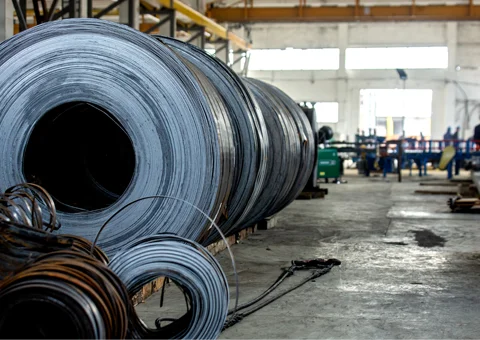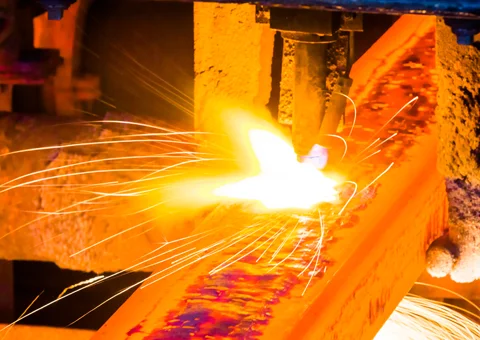
Indian exports of steel and aluminium to the European Union are likely to face a major competitiveness challenge starting January 1, 2026, as the EU’s Carbon Border Adjustment Mechanism (CBAM) shifts from a reporting-only phase to a regime linked to actual payments, a new study by the Global Trade Research Initiative (GTRI) has warned.
The report notes that although the CBAM levy will technically be paid by EU importers, the financial burden will effectively be transferred to Indian suppliers through tougher price negotiations, stricter sourcing norms and reduced margins. To retain market access, exporters may be forced to accept price reductions in the range of 15–22%.
The warning comes at a sensitive moment, with India and the European Union advancing talks on a comprehensive free trade agreement that could be finalised in early 2026.
Under CBAM, carbon emissions embedded in imported goods will directly influence procurement decisions well before formal certificate surrender begins in 2027. From the first shipments of 2026, EU buyers registered as authorised CBAM declarants are expected to factor carbon intensity into supplier selection and contract terms.
The report highlights that production methods will play a decisive role in determining export viability. Steel produced through blast furnace–basic oxygen furnace routes will attract the highest carbon costs, while gas-based direct reduced iron and scrap-based electric arc furnace production will face lower exposure. In aluminium, reliance on coal-fired power significantly increases the CBAM burden.
A critical concern identified by GTRI is the lack of plant-level emissions data available to micro, small and medium enterprises (MSMEs). Smaller exporters often depend on large domestic producers for raw materials, but do not receive verified emissions information required under CBAM rules. In such cases, EU authorities may apply default emissions values, typically set at conservative, high benchmarks, substantially inflating carbon costs even when actual emissions are lower.
Industry representatives caution that this data gap could disproportionately affect MSMEs. Vinod Kumar, president of the SME Forum, said CBAM risks becoming a trade barrier for smaller exporters, not due to product quality or competitiveness, but because of limited access to verified carbon data. Without greater transparency across supply chains, many MSMEs could be excluded from EU markets, he warned.
From 2026, independent verification of emissions will be mandatory, with audits required to be conducted by EU-recognised or ISO 14065–compliant verifiers. The process is expected to be rigorous, akin to a financial audit, involving extensive documentation and validation.
Contracts are also expected to evolve, with CBAM-related clauses becoming standard, covering cost pass-through mechanisms, verification obligations and renegotiation triggers linked to movements in EU carbon prices.
To mitigate risks, GTRI has urged exporters to develop internal CBAM pricing strategies, including adopting a “shadow carbon price” aligned with EU benchmarks. Exporters should also prepare standardised CBAM data packs for each manufacturing facility, detailing production routes, emissions intensity, verification status and audit contacts.
While large, low-emission producers may gain a competitive edge under the new regime, the report cautions that compliance costs and data challenges could push many smaller exporters out of European supply chains.
Meanwhile, official data show that India was a net steel importer during April–November of the current financial year. Domestic steel production stood at 109.73 million tonnes, while finished steel imports declined 36.3% to 4.19 million tonnes. Finished steel exports, however, rose 32.6% to 4.18 million tonnes, and domestic consumption increased 7.3% to 105.05 million tonnes.
Source:Maritime Gateway