Japan's crude steel production fell 0.6% year over year to 6.34 million tonnes in September 2026, with hot-rolled wide strip output down 7.7% as heavy rain and typhoon-related flooding disrupted major steelmaking operations in Chiba.
- Crude steel: 6.341 Mt, down 4.7% M/M and 0.6% Y/Y.
- Converter steel: 4.585 Mt, down 10.8% M/M and 3.2% Y/Y.
- EAF steel: 1.756 Mt, up 16.1% M/M and 7.0% Y/Y.
- Hot-rolled wide strip: 2.548 Mt, down 14.1% M/M and 7.7% Y/Y.
- January-September: Japan produced 60.32 Mt of crude steel, down 0.3% Y/Y.
September's headline decline was modest, but the production-route split was not. Converter steel fell sharply while EAF output increased, reflecting heavier disruption at integrated steelworks in Chiba. The 7.7% year-over-year drop in hot-rolled wide strip is particularly relevant for Japan's flat-steel market because it represents one of the country's largest steel product categories.
MONTREAL (SteelPrices): Japan produced 6.341 million tonnes of crude steel in September 2026, down 4.7% from August and 0.6% from a year earlier, according to preliminary data from the Japan Iron and Steel Federation.
The year-over-year decline was Japan's first in six months.
Daily crude steel production averaged approximately 211,000 tonnes, down 1.5% from August.
Integrated Steel Output Falls as EAF Production Rises
Production trends differed sharply by steelmaking route.
Converter steel production totaled 4.585 million tonnes, down 10.8% month over month and 3.2% year over year.
Electric-furnace steel output reached 1.756 million tonnes, rising 16.1% from August and 7.0% from September 2025.
Industry reporting attributed part of the divergence to severe rainfall and flooding in Chiba Prefecture, which affected major integrated steelmaking facilities more heavily than electric-furnace producers.
HRC Output Drops 7.7% Year Over Year
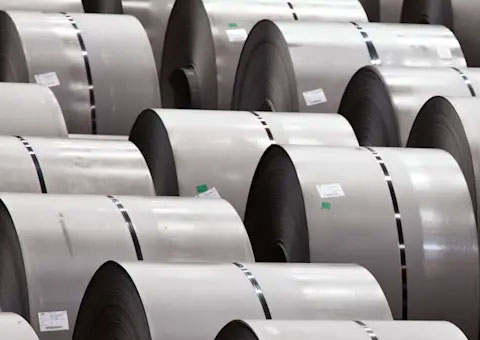
Production of hot-rolled wide strip, the JISF category closely associated with HRC, fell to 2.548 million tonnes in September.
Output was down 14.1% from August and 7.7% year over year.
H-beam production moved in the opposite direction, rising 5.7% month over month and 16.4% year over year to 235,100 tonnes.
Chiba Flooding Disrupts Nippon Steel and JFE
Weather disruptions were an important part of the September production decline.
Nippon Steel temporarily suspended operations at its Kimitsu works on September 21 ahead of Typhoon No. 25. Heavy rainfall subsequently caused flooding at parts of the site, with upstream operations restarting on September 24.
JFE Steel also reported flooding at its East Japan Works in Chiba and estimated an approximately 600,000-tonne crude steel production impact from heavy rain and typhoon-related disruption during August and September.
Nine-Month Output Remains Slightly Below 2025
Japan produced 60.32 million tonnes of crude steel during January-September, down 0.3% from the same period of 2025.
World Steel Association data rank Japan as the world's fourth-largest crude steel producer over the period, behind China, India and the United States.
Primary source: Japan Iron and Steel Federation . Additional reporting: Mysteel Global; Japan Metal Daily; SteelOrbis.