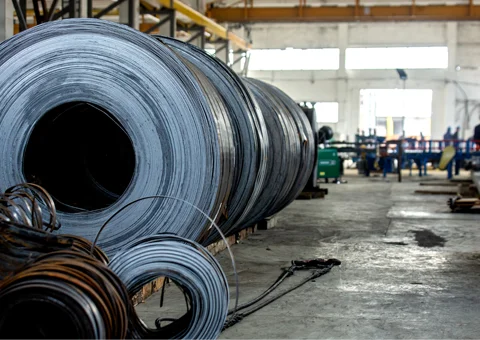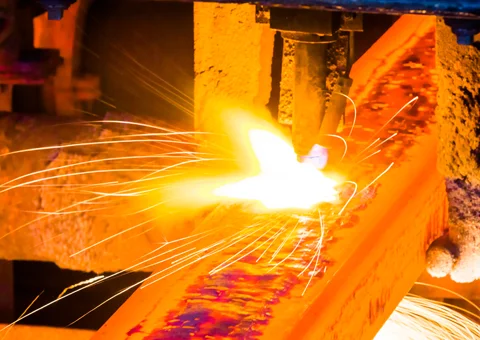
On March 27 local time, the United States and Israel carried out precision airstrikes on Iran’s two key steel producers – Isfahan’s Mobarakeh Steel Company (MSC) and Khuzestan Steel Company (KSC) – while also destroying a supporting power plant serving MSC, forcing both mills into a production halt.
Besides being major contributors to Iran's domestic steel supply, both mills were major sources of steel for export to customers in the Middle East and Southeast Asia, so the shutdown could trigger a reshaping of regional – and potentially, global – steel trade flows, Mysteel's latest analysis warns.
Iran - a major steel producer and exporter
According to online public information, Iran's total crude steel capacity is estimated at around 55-58 million tonnes/year, with its actual steel output in 2025 reaching around 31.8 million tonnes. Among those 31.8 million tonnes, the tonnage for export – including both finished steel products and semi-finished steel – is estimated at around 10.8 million tonnes, accounting for approximately 35% of the country's total crude steel output last year.
Within last year's exports total, those of semi-finished steel, including billets and slabs, amounted to approximately 5.4 million tonnes – representing 50% of Iran's total steel exports last year. Long products such as rebar and structural sections accounted for 2.7 million tonnes, or 25%, while shipments of flat products abroad totaled 1.6 million tonnes, representing 15%, according to the analysis.
MSC and KSC - two pillars for Iranian exports
In Iran's steel export landscape, MSC and KSC accounted for the bulk. MSC alone has an annual crude steel capacity of 11.8 million tonnes, while KSC has a capacity of 3.6 million tonnes per year. Combined, the two mills host roughly 27% of Iran's total steel capacity and contributed nearly 50% of the country's actual crude steel output last year.
The two mills' contribution to the country's overall steel export volume is even more sizeable. MSC accounts for over 60% of Iran's flat steel exports and is the country's only fully integrated flat steel producer. KSC, meanwhile, contributes more than 40% of Iran's semi-finished and long steel exports, particularly in billets and long products.
Far-reaching implication for global steel trade
The significance of the two steel plants in Iran's steel export business makes last Friday's attack especially consequential for global steel trade flows, the report observes. In the short term, Iran's steel exports are expected to plunge from a normal level of around 900,000 tonnes/month to 350,000~450,000 t/m, representing a year-on-year decline of 50%-60%.
Longer term, Iran's exports of steel and semi-finished steel are expected to be revised down from last year's 10.8 million tonnes to 5-6 million t/y, creating a potential global supply gap of around 5-5.5 million t/y, Mysteel estimated.
For global steel trade, the Middle East – Iran's largest steel export destination, accounting for over 53% of total shipments – is likely to feel the most impact from the supply shortage. Notably, Iraq, the single largest importer of Iranian steel, with more than 80% of its steel imports sourced from Iran, may be hit hardest. The United Arab Emirates and Oman as key regional transshipment hubs, may also see its steel inventories quickly dropping, with prices for flat steel and billets expected to rapidly mount in the near term.
For Southeast Asia, the region buys over 30% of Iran's steel exports, with Thailand being the largest single customer for Iranian billets, while Indonesia and Malaysia remain steady importers. These countries are projected to face acute shortages of billets going forward and see their domestic prices of steel products surge in the short run, Mysteel argues in the report.
Potential opportunities
At the same time, alternative sources such as China, India and Turkey may even benefit from the supply shortage, with steel trade flows quickly redirecting toward these countries, resulting in a near-term reshaping of global trade patterns, the analysis said.
For China, the direct impact is limited, given the relatively small volume China exports to Iran. Moreover, the absence of Iranian supply may marginally improve the external demand, creating a phased opportunity for steel exports. Although the logistics disruption risks remain, opportunity brought by the supply shortage is expected to outweigh logistical concerns, the release indicated.
The key variable going forward will be the actual pace of production recovery at these two Iranian mills. Should the restart be prolonged, the supply gap will continue to widen, whereas a faster recovery would quickly narrow the deficit, according to the analysis.
Source:Mysteel