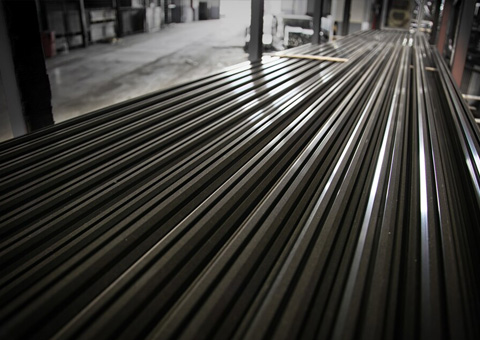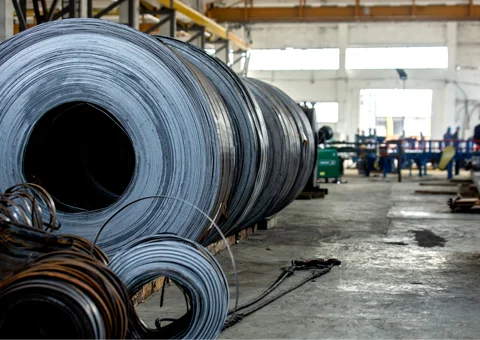
Amid high energy prices, European steelmakers are once again resorting to idling production capacity, as they did in 2022. So far, the problem has been most acute in Italy. Industry associations in several European countries have already called on their governments to respond to the situation and develop solutions to support industry.
Italy
In November, the industry association Federacciai warned that high electricity and gas costs are forcing Italian steelmakers to suspend operations. According to its estimates, continuing operations under current conditions leads to an accumulation of costs that companies will find difficult to recover, and also weakens their competitive position compared with producers in other European countries. At the same time, the association did not specify which companies it was referring to.
Italian Economy Minister Giancarlo Giorgetti, for his part, acknowledged that at such energy prices it is becoming virtually impossible to compete on international markets.
Electricity costs in the country have traditionally exceeded the European average. At the same time, Italy is heavily dependent on gas, which accounts for almost half of its electricity generation.
Federacciai voiced similar warnings earlier, in particular in September at a meeting of the association’s general council. At the time, the industry association warned that the situation could deteriorate further in the coming months amid persistent geopolitical tensions. In the end, these warnings are becoming a reality.
In November, reports began to emerge about production stoppages at individual plants.
For instance, long products producer Acciaierie Beltrame announced the shutdown of its Vicenza plant until the end of the year due to a sharp rise in energy costs. This step is explained by the specifics of the production process, which involves long continuous cycles. Unlike some other producers, the company cannot flexibly adjust its operations to hourly fluctuations in electricity prices.
On November 9–13, Acciaierie Venete (a producer of semi-finished products and long products) suspended operations at its plants in Borgo Valsugana and Sarezzo due to high electricity costs. According to available information, at least 400 employees were placed on temporary furlough. The company is also suspending operations at its Padua plant during hours of peak electricity prices. Acciaierie Venete warns that prolonged production disruptions could negatively affect the operation of its rolling mills, which depend on internal supplies of semi-finished products. The group’s total annual production capacity is about 2 million tonnes.
Roberto de Miranda, head of the family-owned company ORI Martin (which produces billets, hot rolled steel in coils and bars, and induction-hardened wire), said that in early November the company completely halted production for a week. The reasons were higher production costs and the inability to raise prices for its products. For another week, the steel plant in Brescia operated with hourly stoppages during periods of the most expensive electricity (from 18:00 to 22:00). If the situation does not change, ORI Martin may extend production restrictions over the December holidays.
Pittini Group also considered plans to suspend operations at two plants from November 30 to December 4. These are the Siderpotenza and Acciaierie di Verona plants, which produce rebar and wire rods. The company does not rule out that the stoppage may be repeated for another week in December.
According to Corriere della Sera, Feralpi and Duferco were considering similar measures.
Germany and Poland
According to Kallanish sources, as of November 11, ArcelorMittal had suspended operations at its long products mills in Hamburg (Germany) and Warsaw (Poland) due to a sharp increase in energy costs, and had also curtailed operations at its facilities in Duisburg and Sosnowiec, Poland.
The company raised prices for rebar and bars, but buyers did not accept the proposed level. According to market participants, production could resume if customers agree to price increases for wire rods and bars of about €100/t. At the current level of costs, the plants’ operations remain unprofitable.
Ensuring competitive energy prices became one of the key points of a joint appeal by the members of the Steel Alliance to the German federal government. The alliance includes 11 federal states that are home to steelmaking companies, the IG Metall trade union and the Wirtschaftsvereinigung Stahl association.
The document states that the current level of electricity prices in Germany does not meet the requirements of competitiveness and affordability. The proposed measures include maintaining federal subsidies for electricity grid fees and gradually increasing them through the mid-2030s, extending electricity price compensation beyond 2030, and lowering natural gas costs.
The document was presented on the eve of the National Steel Summit. The event was accompanied by a protest by about 2,000 industry workers, who, among other things, supported employers’ demands to reduce energy costs.
Ahead of the summit, Salzgitter CEO Gunnar Groebler, commenting on the company’s nine-month results, said that European electricity prices are not acceptable in the long term for an energy-intensive industry. He called on the German government and Brussels to work more actively to resolve this problem. At the same time, Salzgitter has partially protected itself from short-term price fluctuations through power purchase agreements (PPAs) and forward contracts. They allow the company to cover its needs until the end of 2026 and for much of 2027.
Spain
The Spanish steel producers’ association Unesid also presented a document with 10 priorities for the country’s leading political forces ahead of the general election on November 29. One of the industry’s main demands is ensuring affordable energy.
Every year, Spain’s steel sector consumes about 10 TWh of electricity and the same amount of natural gas. The association insists on structural reforms that would reduce the final cost of electricity to €40/MWh, maximize compensation for indirect CO? costs, support gas-intensive companies and ensure priority grid connection of plants for decarbonization needs.
According to the latest estimates of the Alliance for the Competitiveness of Spanish Industry, the combined impact of higher gas and electricity prices on the industrial sector in 2026 will reach €8.9 billion (the September forecast was €7.4 billion).
The revised estimates indicate a rapid deterioration in conditions for industry and rising production costs, especially in energy-intensive sectors. The alliance’s spokesman Carlos Reinoso warned that companies will have to absorb an additional €1.5 billion in costs in a short period amid fierce international competition, calling for urgent measures.
2026 vs 2022
Thus, the European steel industry is once again facing an energy shock caused by military action – this time by the conflict in the Middle East. The industry was in a similar situation four years ago.
In 2022, a combination of low prices, weak demand for finished steel and a sharp rise in energy prices led to large-scale shutdowns of steelmaking capacity in Europe.
For instance, from the beginning of September 2022, ArcelorMittal idled capacity totaling about 7 million tonnes of steel per year in various European countries. Similar measures were taken by US Steel Kosice (now Nippon Steel Slovakia), Dunaferr, Liberty Ostrava, Ferroatlántica, Ferriere Nord and other producers.
The difference between the crises currently lies not only in the level of energy prices, but also in the financial position of the steel companies themselves. Four years ago, they had better reserves, so they could subsequently partially offset rising costs. By contrast, the current energy shock has come during a period of prolonged weak demand and low profitability.
Weak demand for long steel products is adding to the pressure, particularly as the recently announced production suspensions have been concentrated among long steel producers. This factor limits companies’ ability to pass on rising costs to buyers. Despite the measures to reduce electricity prices introduced this year by Italy and Germany (on November 18, the EU approved an amendment to German state aid schemes that will help the country combine electricity subsidies for energy-intensive companies this year), the industry still considers them insufficient and insists on long-term solutions.
Courtesy : https://gmk.center/