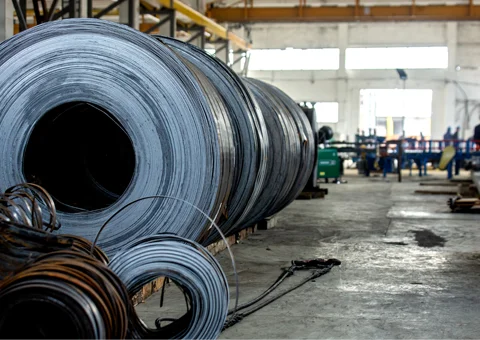
China's domestic steel prices continue to fluctuate within a narrow range, as demand has yet to see any significant recovery, according to the latest monthly report of the China Iron & Steel Association (CISA), warning that sustained attention should be paid to raw material and fuel costs.
The association noted that since March, steel inventories held by both Chinese steel mills and traders have remained persistently higher than during the same period last year, indicating that the recovery in demand cannot fully absorb the supply-side increase brought about by the seasonal resumption of production among domestic steelmakers.
As of April 10, inventories of the five major steel products comprising rebar, wire rod, hot-rolled coil, cold-rolled coil and medium plate held by CISA's member mills had reached 17.51 million tonnes, marking a rise of 9.2% compared with the same period last year.
As of the same day, stocks of the five major steel items at traders' warehouses across the 21 Chinese cities under CISA's regular tracking totaled 10.82 million tonnes, higher by 10.1% on year.
The severe adjustment of the real estate sector has led to a sharp fall in construction steel demand, while demand from manufacturing sectors such as automobiles, shipbuilding and home appliances – though resilient – is insufficient to fill the gap, CISA explained.
On the macroeconomic front, the ongoing conflict in the Middle East is creating more shocks for the global economy, significantly weighing on growth prospects and fueling uncertainty, the association said in the report.
CISA noted that earlier this month, the United Nations Conference on Trade and Development had predicted that global economic growth this year would slow to 2.6% from 2.9% in 2025, even without any further escalation of the Middle East conflict.
On April 14, the International Monetary Fund's World Economic Outlook report had reduced its forecast for world economic growth for 2026 by 0.2 percentage point on year to 3.1%, as Mysteel Global reported.
However, China has allocated Yuan 250 billion ($36.6 billion) in ultra-long special treasury bonds for 2026 to support consumer goods trade-in programs, and established a Yuan 100 billion special fund for fiscal-financial coordination to boost domestic demand. These policies may indirectly stimulate steel demand through industrial chain transmission, CISA pointed out.
Meanwhile, China will continue to adopt a moderately loose monetary policy this year, which, together with coordinated fiscal and financial efforts, will help reduce funding costs for the steel industry.
In addition, the central government will intensify efforts to eliminate excessive competition, imposing stronger constraints on the supply side to improve supply-demand dynamics and underpin steel prices.
China's steel industry is in a critical phase of deep restructuring, the association admitted. Amid challenges such as shifting supply-demand balances, cost pressures and a worsening global trade environment, the profit margins of steelmakers have been significantly squeezed.
Heading into late April, seasonal factors such as the arrival of the rainy season in southern China and sand clouds sweeping across the country's northern regions may dampen domestic steel demand.
Enforcing production caps is essential not only to ease supply pressures but also to lift the industry out of low-price competition and restore healthy profitability, CISA said. The association suggested that domestic steel mills should closely monitor the changes in steel demand among different sectors and adjust their production schedules to reduce inventories and prevent risks.
Source:Mysteel Global